Researchers from Skoltech (part of the VEB.RF group), the University of Montreal (Canada), and the Advanced Telecommunications Research Institute International (Japan) have presented a neural network-based approach that generates scary images to analyze the viewer’s individual fears and create even scarier ones. This tool is designed to help people overcome phobias in a safe environment. The research was published in the journal Psychiatry and Clinical Neurosciences.
Desensitization – a classical method for overcoming phobias – involves gradually exposing an individual to the source of their fear in a safe and controlled environment, while increasing the intensity of the stimulus step by step. For example, a patient with arachnophobia might start by looking at cartoon images of spiders, progress to real photos and videos, then move on to viewing live spiders behind glass at a distance, and finally learn to relax with a live spider nearby.
“The ability to generate scary images of a given intensity would obviously be valuable for any multimedia phobia simulator. Another benefit is a personalized approach, which we have successfully implemented,” said Gurgen Soghoyan, a research scientist at the Skoltech Biomed Technologies Center and a co-author of the study. “Currently, the algorithm escalates fear by learning from users’ skin conductance responses and self-reported fear levels. Going forward, we plan to use neurophysiological signals, particularly fMRI data, to link the neural network directly to the brain.”
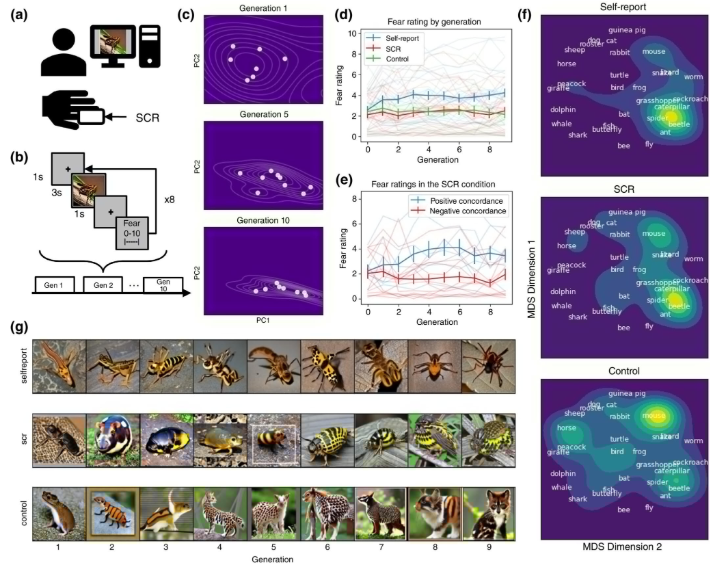
The study involved a group of 20 individuals who were shown various images ranging from harmless ones to images that trigger common phobias, such as the fear of insects. Participants rated how fearful each image was while researchers observed how the autonomic nervous system responded to the images. Then, the model was trained using these data to generate a new image that would elicit a stronger fear response.
“Using conscious feedback from participants, we created images that became scarier with each iteration. New images generated based on a physiological marker triggered an average fear response that did not exceed that of the reference images. This again raises questions about our perception of frightening stimuli, which has a complex structure that includes autonomic bodily responses and conscious evaluations of observed phenomena,” Soghoyan added.
This study contributes to our understanding of the psychological aspects of interaction between humans and generative artificial intelligence by proposing a cutting-edge desensitization simulator for patients with phobias. It also sheds light on the neural mechanisms behind the physiological component and subjective perception of emotions, including those in anxiety disorders.