“The customer‑contractor model is a thing of the past”: SPIEF discusses education development model for economic growth
June 4, 2026

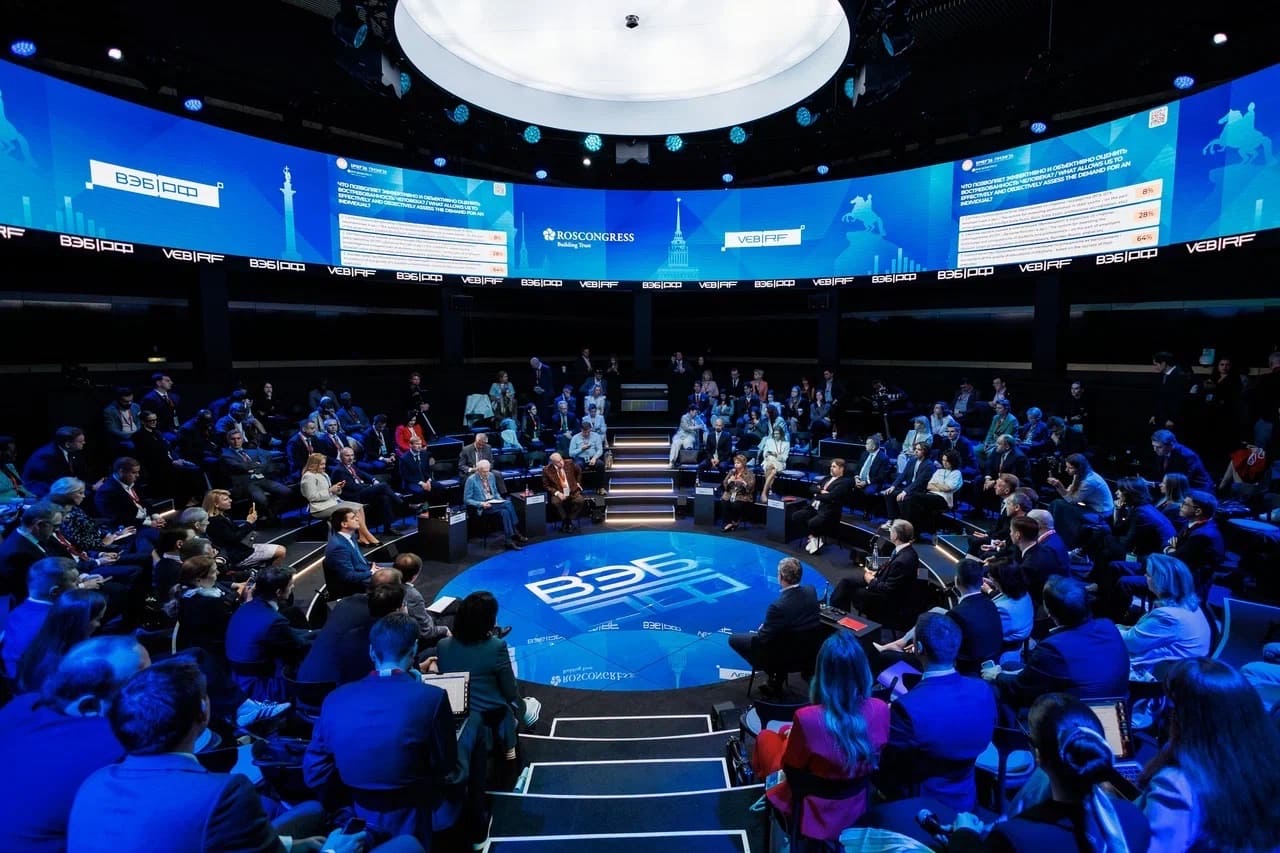
At the St. Petersburg International Economic Forum, a session titled “The Education System as a Foundation for Sustainable Economic Growth” took place, with the participation of Russian Presidential Aide Andrey Fursenko, VEB.RF Head and Skoltech Board of Trustees Chairman Igor Shuvalov, Skoltech President and Academician of the Russian Academy of Sciences Yulia Gorbunova, as well as representatives of business and the academic community. Participants discussed the role of education in achieving Russia’s technological leadership, where the main priority is not formal diplomas but real cognitive skills, and where the system must learn to respond flexibly to challenges, implement AI, ensure personal fulfillment, and renew itself rapidly to boost labor productivity and ensure the country’s sovereignty.

subscription
Photo credit: VEB.RF press office

The discussion moderator, Presidential Aide Andrey Fursenko, opened the session by highlighting two key functions of education: transmitting the cultural code from generation to generation — the conservative component necessary for education — and preparing for the future.

“Education not only prepares for the future but also shapes that future. How do we maintain a balance between these functions? That is a major challenge. Because of this, no one is ever satisfied with education: everyone says either this is missing or that is missing,” Fursenko noted.

Alexander Auzan, Dean of the Faculty of Economics at Lomonosov Moscow State University, agreed that education is like evolution, based on a combination of continuity and change. At the same time, the conservatism of education, in his view, should lie in transmitting the “codes” of science. Auzan also spoke about the values of higher education:

“In my opinion, the most important product of education is its value. And I will tell you which values, in our view, contribute to economic growth. In 2023, we discussed this with the Central Bank and the Ministry of Finance when we were developing the government‑approved financial culture development strategy. These are: a long‑term perspective, trust in people and institutions, and responsibility. Without a long‑term perspective, there is no investment model, and a long‑term perspective is a product of university education,” Auzan said.

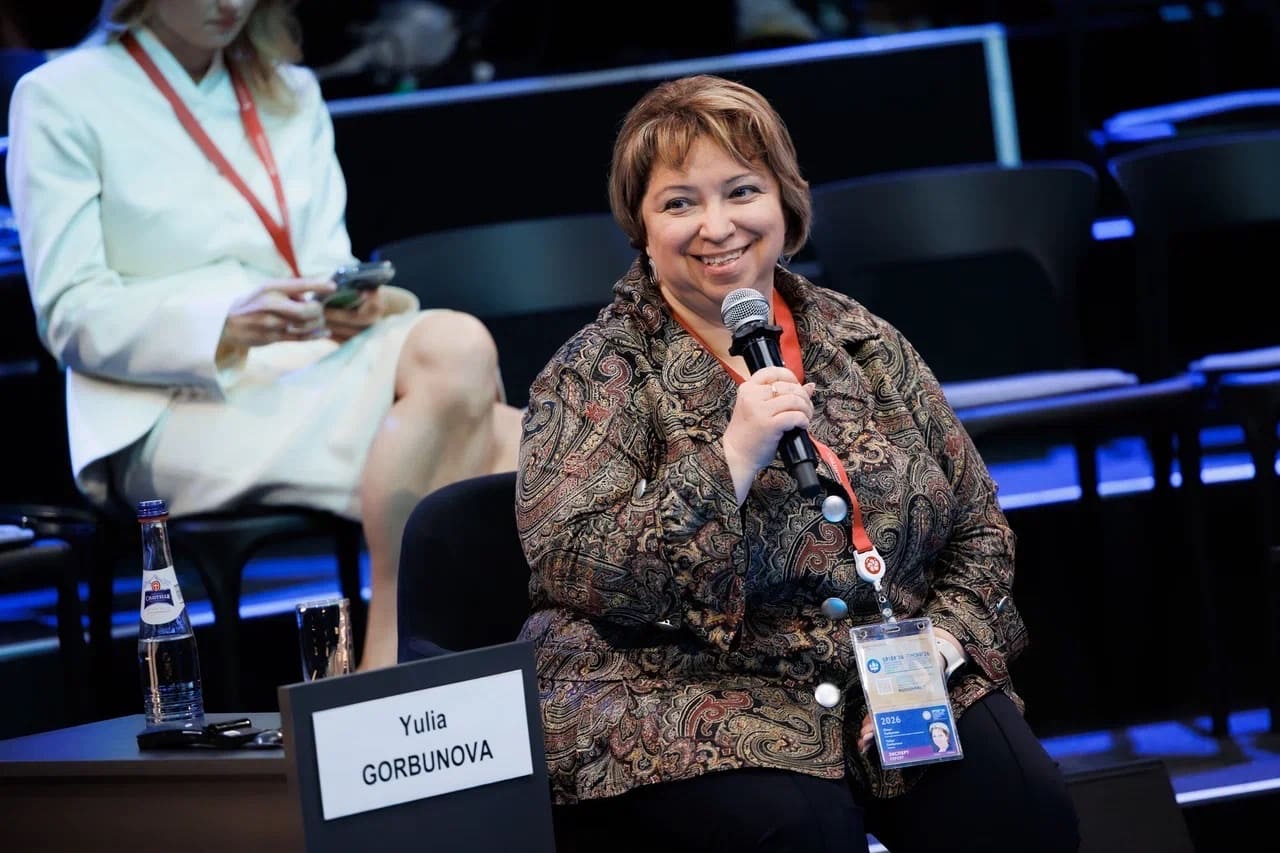
Continuing the discussion, moderator Fursenko supported the thesis that higher education is a serious development tool and gave the floor to Skoltech President Yulia Gorbunova, who emphasized that universities should prepare people not only for the future but also for uncertainty — for working in a changing, interdisciplinary world and for teamwork. At the same time, in the rector’s opinion, not all universities must be oriented toward technological leadership; some may retain their cultural mission.

subscription
Photo credit: VEB.RF press office

“A month and a half ago I became the president of Skoltech, and Skoltech was created precisely as an experimental platform that can change its research topics relatively quickly because frontier science is not static — it is constantly changing. […] I agree that in this kind of activity, partnership with high‑tech companies is very important. […] One of my colleagues asked: ‘What should we invest in — universities or companies?’ Only in partnership. The customer‑contractor model is a thing of the past,” Gorbunova noted.

The president cited as examples the joint master’s programs between Skoltech and Yandex — “Artificial Intelligence in Robotics” — as well as the program between Skoltech, Sber, and the Russian Economic School — “Artificial Intelligence and Financial Technologies.” Gorbunova also stressed the importance of cooperation with regions: “Each region has its own characteristics and its own tasks. And it seems to me that one of the missions of today’s university is to unite regions. We at Skoltech are ready to engage in cooperation with regional universities.”

One of Skoltech’s key projects — the development of sodium‑ion battery technology — is being carried out at the request of an enterprise in the Krasnoyarsk Territory, with support from the regional government and the Russian Science Foundation. The discussion was joined by Mikhail Kotyukov, Governor of the Krasnoyarsk Territory, who supported the importance of cooperation between metropolitan universities and regions, noting that this is a matter of national security and long‑term sustainability.

“Yulia Germanovna made a very good point about regions. […] We must not forget about the regions. Not all the best should live in just five cities of the country […] The best should be everywhere. There should be good universities everywhere, and there should be very good schools everywhere,” Kotyukov emphasized.

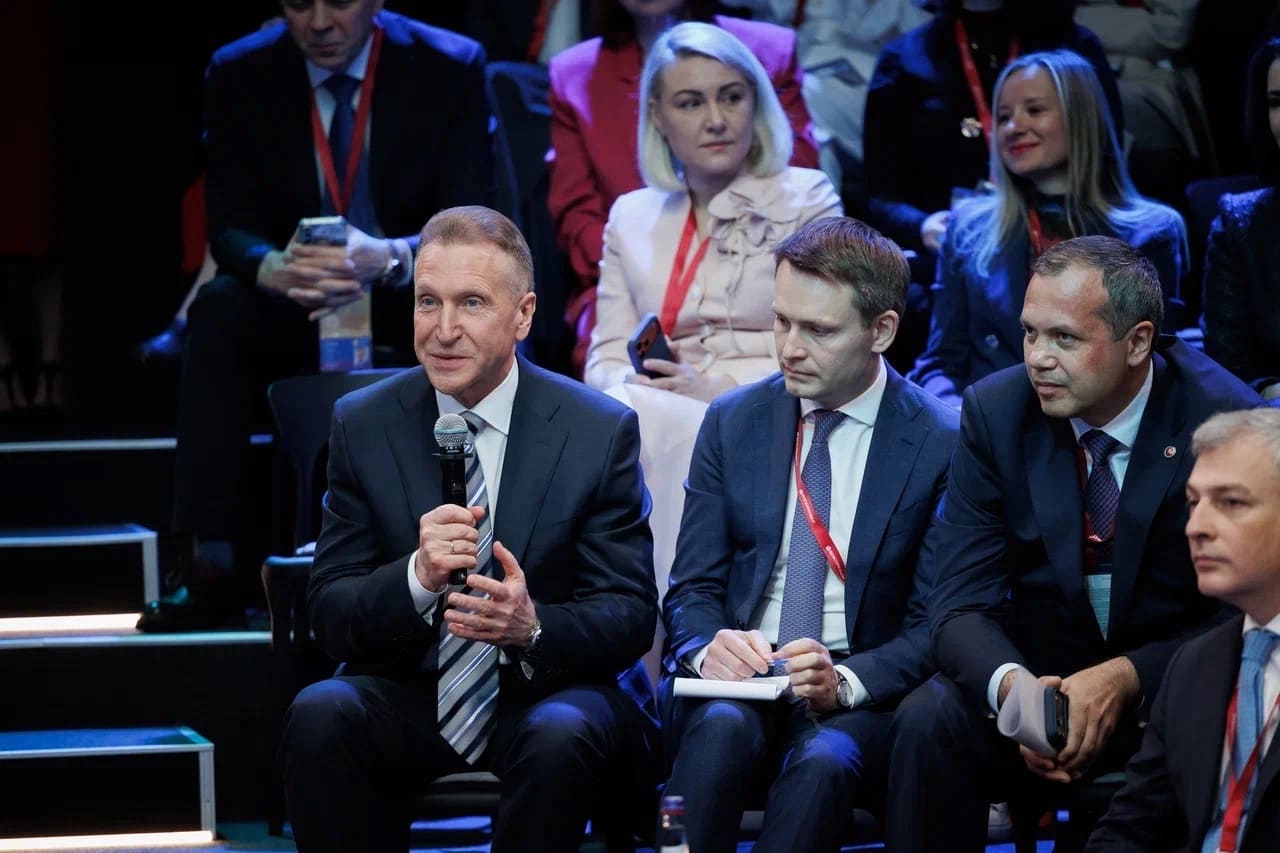
Igor Shuvalov, head of VEB.RF and chairman of the Skoltech Board of Trustees, warned during the session against abrupt and ill‑considered changes to the entire education system.

subscription
Photo credit: VEB.RF press office

“Our achievements in education, accumulated over 30 years, must be defended. Then technology and artificial intelligence will develop on this foundation. Young people will see a future. VEB, through the Prosveshcheniye company, is taking responsibility for how to teach children so that they truly learn more and are well prepared for life. This toolkit includes digital products that we have agreed to develop with VK and other partners. We are all now talking about technological leadership. This technological leadership is based on freedom, not on complete dirigisme,” Shuvalov noted.

At the conclusion of the session, Yulia Gorbunova agreed that important changes — not only in education but also in the development of society — begin in school, and she once again emphasized the need for cooperation between universities, industry, business, and regions.