This year, the Moscow Government Award for Young Scientists was given to 50 recipients, including four Skoltech researchers: Stanislav Evlashin, an associate professor at the Materials Center who was recognized in the Chemistry and Materials Science (Research) category, and a research team consisting of Leading Research Scientist Elena Mukhina and Senior Research Scientists Aisylu Askarova and Aliya Mukhametdinova from the Petroleum Center, who received the award in the Environmental Technologies (Development) category.
Stanislav Evlashin won the competition for his work on the fundamental principles of synthesizing low-dimensional carbon materials for optical, electrical, and electrochemical applications. He also presented prototypes of bolometers, optical sensors, and gas sensors that use carbon nanowalls.
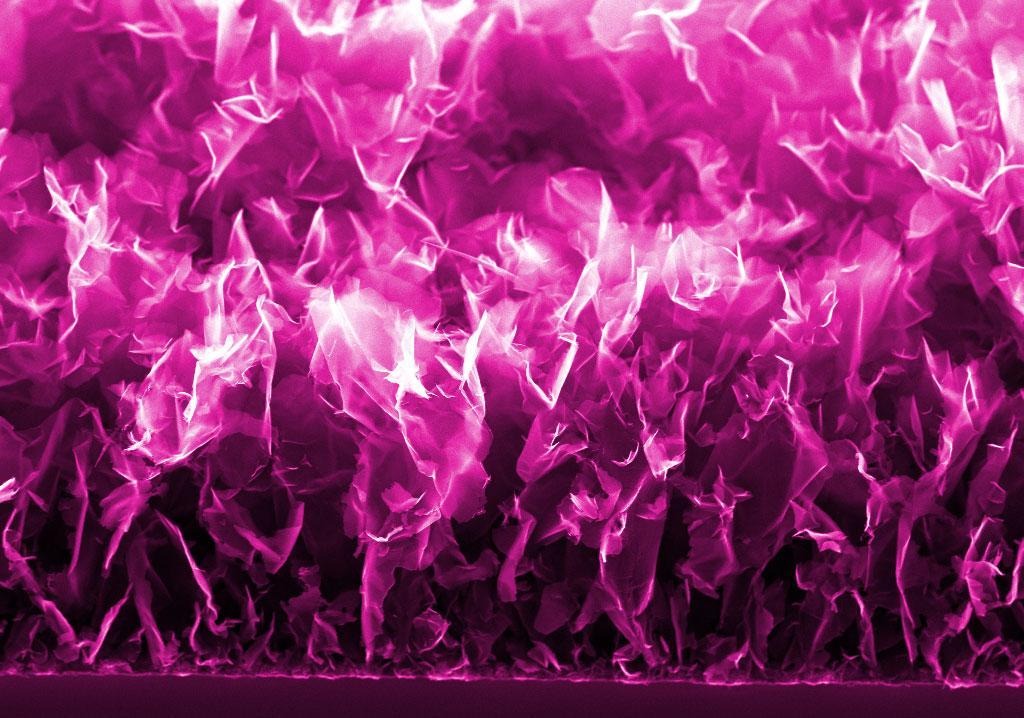
Image. Colored scanning electron microscope image of carbon nanowalls, aka vertically aligned graphene sheets, that can be used to make electrodes for supercapacitors, which store and release energy faster than batteries. Credit: Stanislav Evlashin.
“Our comprehensive study focused on carbon nanowalls, also known as vertically aligned graphene sheets. This new type of material, which was unexplored until recently, has unique geometry and properties that could be used in various devices,” Evlashin shared. "We examined how the surface forms and changes, and then synthesized carbon nanowalls with properties tailored for electronics, optics, and electrochemistry. We discovered that nanowalls have truly unique properties. For the first time, they demonstrated the absorption of over 99.9% of visible light and 92% of near-infrared radiation. We also modified the material with plasma, achieving a fivefold increase in capacitance.”
A team led by Elena Mukhina won the prize for their technology that generates hydrogen within gas reservoirs. The researchers presented and validated a method of producing hydrogen that combines in situ combustion − a well-known oil recovery enhancement technique − and steam methane reforming. In addition to generating hydrogen within the reservoir, the technology could facilitate carbon dioxide storage using existing wells and infrastructure.
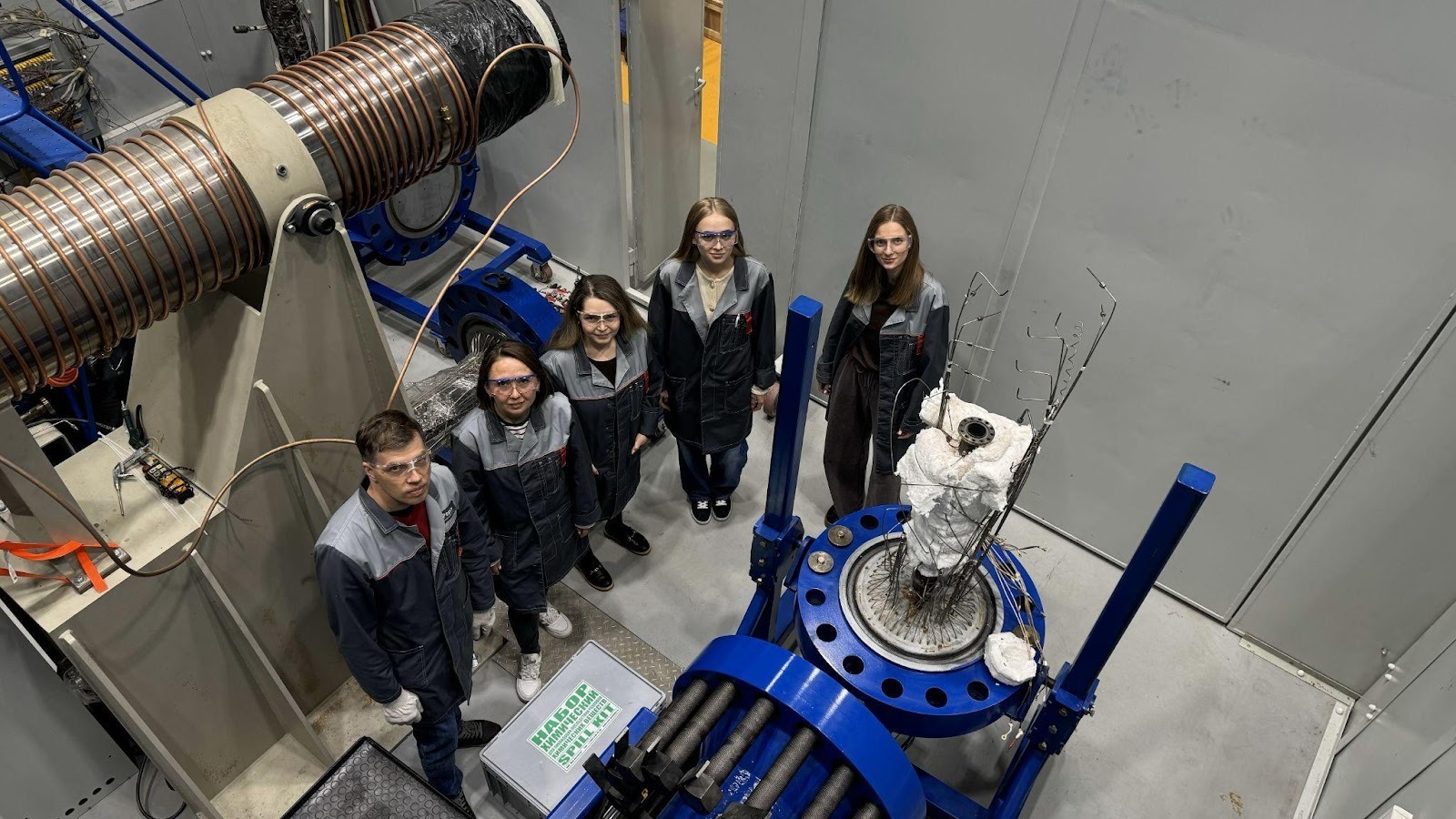
Image. Elena Mukhina’s team at the Skoltech Petroleum Center. Elena Mukhina (right), Aisylu Askarova (second from left), and Aliya Mukhametdinova (center). Credit: Elena Mukhina.
“This award recognizes the research that can lead to practical technological solutions in complex areas such as the environment and energy transition. It also highlights the importance of our field of study and represents a significant step in bringing technology to industrial implementation,” Mukhina commented. “Our team has demonstrated for the first time that industrial hydrogen can be generated within a gas reservoir. Previously, there was virtually no experimental research, and existing studies focused primarily on oil fields, which have fundamentally different processes. Our calculations and experiments have become a global benchmark.”
The technology’s potential lies in transitioning to pilot testing and integrating a new source of low-carbon hydrogen into Russia’s energy infrastructure. The oil and gas sector, in particular, could benefit from using the technology in depleted and water-saturated fields where conventional development is economically impractical. This new approach also creates opportunities for combined hydrogen production, carbon dioxide disposal, and gas storage, forming the basis for new hybrid energy and climate solutions.
Established in 2013, the Moscow Government Award for Young Scientists recognizes outstanding fundamental and applied research in the natural, technical, and human sciences, as well as the development and implementation of new technologies, instruments, equipment, materials, and substances. A total of 50 prizes are awarded in 22 categories, including 11 research and development categories. Individual scientists and teams of up to three people are eligible to apply. If a team wins, the 4 million ruble prize is divided equally among its members.
